


Air Currents: Air Diffusion Inside a Home

Traditionally, natural ventilation has been used to renew the indoor air of homes by creating air currents between opposite facades.
Requirements of your bathroom ventilation grille
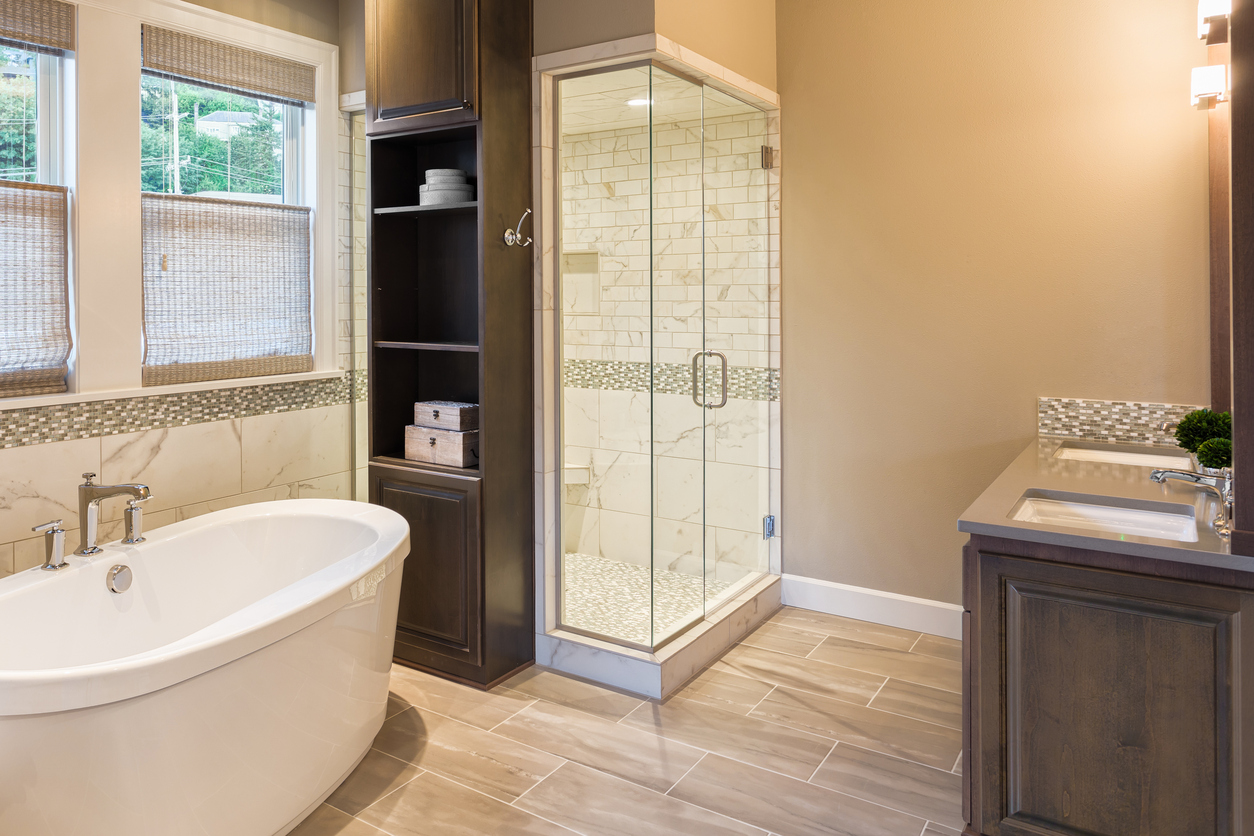
Bathroom ventilation grille as the initial component of the system for extracting stale air from your home. Placement requirements.
How a humidity sensor works. Common uses

The humidity sensor is a reading device used in indoor spaces to control air humidity and temperature
Mechanical Ventilation: advantages over other ventilation systems
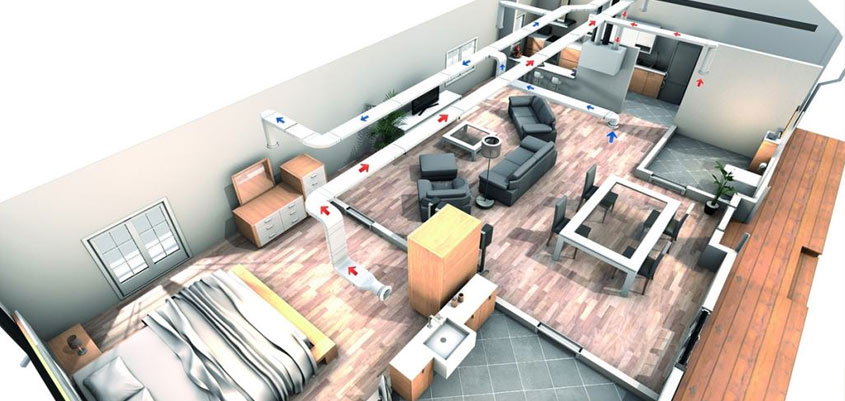
Advantages of controlled double-flow mechanical ventilation compared to natural ventilation and hybrid ventilation.
Health: requirements of the Technical Building Code

Requirements of the CTE regarding health. CTE DB HS 1, Protection against moisture. CTE DB HS 3, Indoor air quality.
Requirements of the RITE regarding ventilation

At the national level, the RITE, in its latest update in 2013, demands a specific air quality based on the type of building.
C.T.E. DB-HS 3. The air quality. Thermodynamics and aerothermal energy

The C.T.E. DB HS3 requires a series of requirements that must be applied in: block housing, detached houses, row houses, and semi-detached houses
Reduce the consumption of your home using an energy recovery unit

What is an energy recovery unit? Advantages of installing a heat recovery unit to reduce the energy consumption of your home.
Ventilation in parking lots, what does current regulation say?

Ventilation in parking lots: requirements for natural ventilation and requirements for mechanical ventilation. Applicable regulations.
How does air flow through ventilation ducts?

There are different types of ventilation ducts. They are usually metallic, made of textile or insulating materials, or reinforced aluminum.