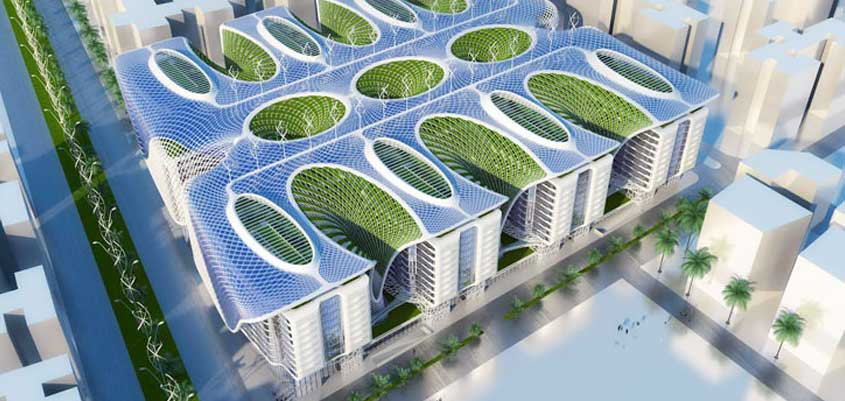
Mechanical ventilation and aerothermics in smart buildings
In ventilation and energy efficiency it is essential to find a way to ensure that a space reaches the necessary comfort temperature without high supply costs. And one of the methods that work best is aerothermics, an efficient mechanical ventilation system widely used in passive houses to heat spaces in winter and even cool them in summer.
Aerothermics extracts energy from the outside air efficiently thanks to a heat pump. The air from the street is reused, even if it is very cold, to heat the space or the water. It is also capable of providing cooling in summer.
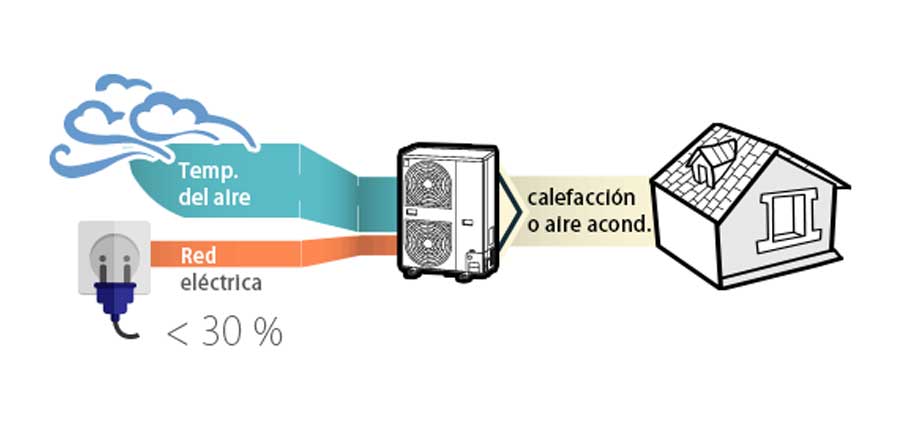
To do this, the aerothermal system extracts energy from the outside air to convert it into heat inside the home, which is technically known as the refrigeration method. It even works when the exterior temperatures are below zero. It converts cold into heat while being capable of providing up to 78% free energy. The rest of the necessary energy will be provided electrically, never from combustion.
The pump that serves as a mechanical ventilation system is also renewable, which is why aerothermal methods are the only ones approved for use in passive houses. This type of housing is characterized by not using traditional air conditioning systems, which have always had a high energy consumption.
Aerothermal systems are ideal in single-family homes and medium-sized constructions. In new construction, it requires a space to house the external units of the equipment. And it is in the smart buildings of the present and especially the future where aerothermics can mean a significant advance, even becoming a winning option in ventilation.
Aerothermics in nearly zero-energy buildings
We have already mentioned the case of nearly zero-energy construction. In Spain, the residential sector accounts for 17% of the country's energy consumption, and that is why from 2020, buildings raised in Spain will have to be certified as nearly zero energy consumption.
The European regulation defines that nearly zero-energy buildings are those that have "a very high level of energy efficiency because it requires a level of energy that is almost zero or very low to operate, and that to a large extent this energy comes from renewable energy sources, either produced in situ or in the environment".
Many of these buildings are also considered smart. Although the latter are based on using technology for various purposes, they are also designed to save more energy and be efficient. Something that directly connects with nearly zero energy consumption.
Therefore, aerothermics is an ideal system for the future of tomorrow's buildings, although it is already part of the present. In nearly zero-energy buildings, it is required that the homes consume energy for heating and cooling of less than 30 kW/m2 per year. Aerothermal systems and controlled mechanical ventilation can achieve these values thanks to their advantages.
- No fumes are emitted and there is no combustion, nothing needs to be burned.
- The air that the aerothermal system takes from the outside is free. It uses the direct refrigeration cycle in refrigeration and reverse. Heats water and the space thanks to the cold air from the street.
- It is sustainable.
- Only the electrical consumption is paid, which in an aerothermal system can be about 22%, according to experts.
The use of aerothermics significantly reduces CO2 emissions as an energy and renewable source. And it will offer greater energy independence in Spain. What is the sector's challenge? That fossil fuels take a back seat, something that is increasingly a reality. Aerothermal systems are renewable, and these green energy sources already account for 40% of the energy production in Spain. More or less the same percentage as fossil fuels. Nuclear currently represents 20%.

Siber Ventilation
Related posts

How to blow and how to extract air in indoor spaces

How do spores affect our health?